
By the LYL Clean Air Engineering Team · Published Jul 16, 2026 · Updated Aug 6, 2026
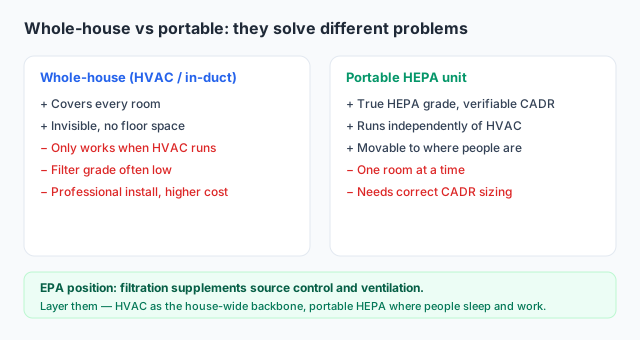
The three gaps people miss about whole-house filtration
- It stops when the fan stops. In-duct filtration only cleans air the HVAC is actively moving. Mild weather, overnight hours, and any period the system idles are unfiltered time — exactly the hours a bedroom unit covers.
- The filter grade is usually lower than True HEPA. Central systems must keep airflow resistance low, so many run filters that miss the fine particles a sealed HEPA captures. That is a design constraint, not a brand failing — see MERV vs HEPA.
- Coverage is not concentration. Spreading filtration across a whole house is not the same as putting real clean-air capacity in the 8–10 m² around a bed. Clean-air capacity is best spent where lungs are.
Where portable units lose — honestly
One room at a time, they need correct CADR sizing, they occupy floor space, and they only work with doors closed. A portable unit in a hallway with every door open is doing very little. Neither format escapes the rule that filtration supplements source control and ventilation — a purifier removes particles from existing air; it does not add fresh air or remove CO₂.
What this means for distributors and brands
| Channel factor | Whole-house | Portable HEPA |
|---|---|---|
| Installation | HVAC trade, professional fit | Plug in — no installer |
| Logistics | Bulky, trade distribution | Parcel-shippable, e-commerce ready |
| Spec on the listing | System-dependent | CADR + room size + HEPA grade |
| Recurring revenue | Furnace filters (commodity) | Branded replacement filters |
Sources: US EPA — air cleaners and air filters in the home; published HVAC-vs-portable comparisons.
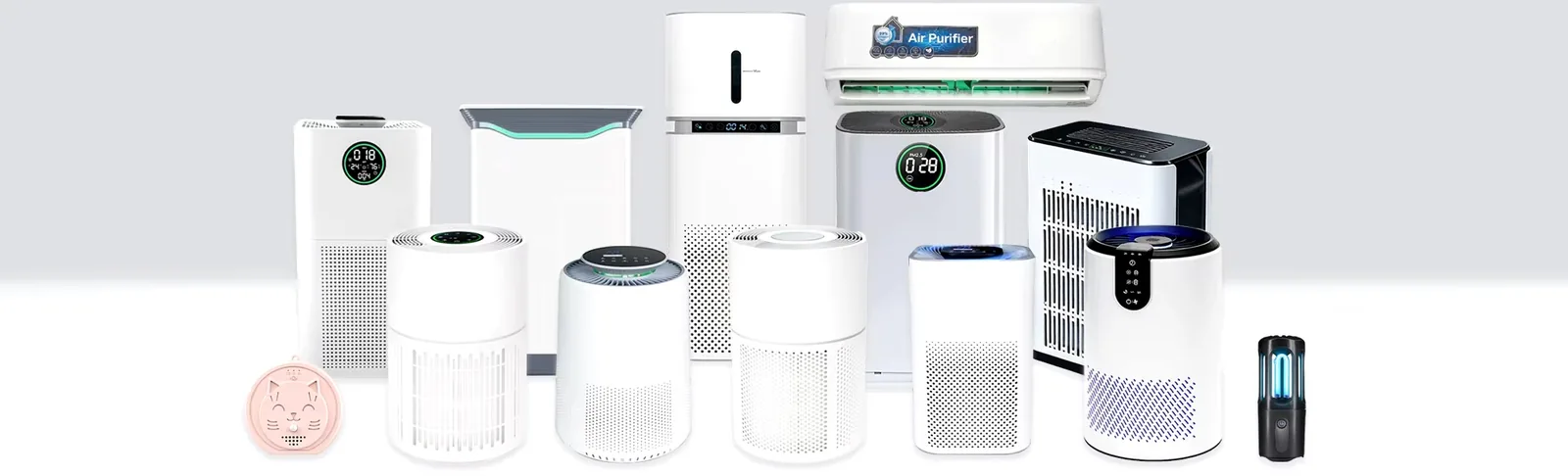
For import, e-commerce and hospitality channels, the portable format is usually the more practical product: no installer, parcel logistics, and a spec sheet buyers can verify. That is the category we manufacture — tower, desktop, portable and commercial platforms, each quoted with CADR from its test report.
Planning a portable HEPA line for your channel?
Tell us your target rooms and markets — we will match model class, CADR and certification pack, and plan the replacement-filter program alongside it.
Request Model OptionsFrequently asked questions
Is whole-house better than portable?
Neither universally — whole-house covers every room but only while the HVAC runs and often at a lower filter grade; portable gives verifiable HEPA-grade CADR continuously in one room. Layer them.
Why keep portables if the HVAC filters?
HVAC filtration stops with the fan, in-duct grades are typically lower than True HEPA, and portables concentrate clean air where people sleep and work.
Can a purifier replace ventilation?
No. It removes particles from existing air; it adds no fresh air and removes no CO₂. Stuffiness is a ventilation problem.
Related guides
- MERV vs HEPA — why in-duct grades differ from True HEPA.
- CADR calculator — sizing the portable side properly.
- Where to place it — getting the rest of the performance.
- Are air purifiers worth it? — the evidence base for both formats.
General sourcing guidance. System performance varies with HVAC design, filter grade and run time; confirm portable CADR against the SKU test report.