
By the LYL Clean Air Engineering Team · Published Jul 16, 2026 · Updated
Put the purifier in the room you want to clean, with unobstructed intake and outlet vents. Follow the manufacturer's model-specific clearance, surface and orientation instructions. Check whole-device CADR at the intended operating speed; neither a corner position nor a raised position has a universal performance multiplier.
Four checks before choosing a location
| Check | What to verify |
|---|---|
| Intake and outlet clearance | Identify every vent on the actual model. Keep furniture, curtains and other objects out of the airflow path; use the clearance specified in its manual rather than a distance copied from another product. |
| Room and operating speed | Compare room volume with the model's measured clean-air delivery. Request performance at the speed the customer will use, not just the maximum-speed value. |
| Installation surface | Use the floor, table or mounting arrangement specified for the unit. Check stability, load capacity, cord routing and access for filter replacement. |
| Pollutant sources and ventilation | Use filtration alongside source control and appropriate ventilation. A portable purifier does not provide outdoor air or establish a controlled clinical environment. |
The US EPA guide to air cleaners in the home explains how filtration supplements source control and ventilation, how CADR relates to room sizing, and why air cleaners cannot remove every pollutant. This is general guidance, not certification of a LYL product.
What published placement tests can and cannot tell you
Smart Air's placement testing includes airflow measurements on three of its purifiers near a wall. The reported airflow averaged about 5% of normal when those units were flat against the wall. That result concerns the tested equipment and airflow arrangement; it is not a universal allergen-removal rate and not a LYL product test.
The same source describes a separate closed-bedroom experiment in which particle reductions at different measurement positions were similar. The equipment, room and test method matter when interpreting either result. We do not assign a fixed percentage benefit to placing any purifier in an open position instead of a corner.
For a sourcing decision, ask for the model's intake diagram, clearance instructions and relevant test report. If the intended installation differs from the tested setup, evaluate a sample in that installation rather than extrapolating from another manufacturer's results.
Turn placement guidance into an OEM acceptance check
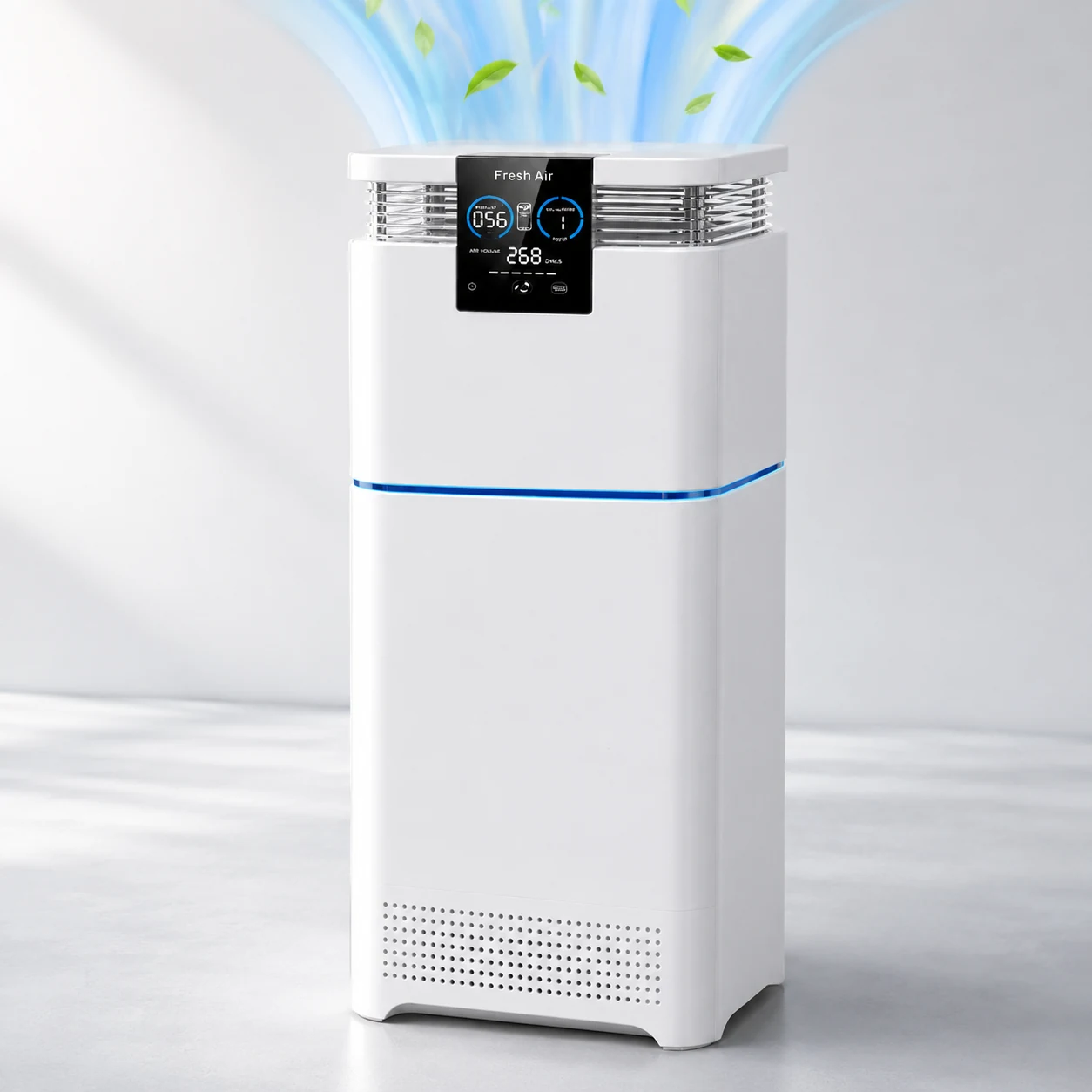
- Approve the manual with the sample. Identify vents, the intended support surface, safe cord routing and maintenance access on the supplied model.
- Check the intended fan speed. Pair noise information with clean-air delivery at that speed. A quiet setting is not evidence that the unit can clean the proposed room.
- Record installation constraints. Provide room dimensions, likely furniture positions, power-outlet location and access needs in the RFQ. Do not assume a circular intake eliminates clearance requirements.
- Keep claims within the test scope. Record model, filter configuration, fan setting and test conditions when quoting a performance result. A diagram explaining placement must not look like an unperformed comparative test.
Use the CADR calculator for an initial room-sizing estimate, then confirm the proposed model's report and installation requirements. For bulk projects, send the room layout and intended use with your model-options inquiry.
Related sourcing guides
- Air purifier noise levels — compare noise and operating speed.
- Portable air purifier OEM options — review form factor and installation needs.
- Air purifier evidence and limits — understand what filtration can and cannot address.