By the LYL Clean Air Engineering Team · Published Jun 6, 2026 · Updated Aug 6, 2026
Smart air purifiers can improve premium positioning, but they also add sourcing complexity. A WiFi or app-enabled purifier may require a compatible model, app setup discussion, packaging language, user manual clarity, testing time and support expectations. For distributors and private-label brands, the key decision is not simply whether an app is available. The real question is whether smart features create enough value for the target channel.
This guide explains how to evaluate WiFi, Tuya app and IoT feature discussions when sourcing air purifiers from an OEM/ODM factory. Feature availability must be confirmed by model and project scope. Do not promise app functions, voice control or automation features until the supplier confirms the exact configuration.
1. When smart features make sense
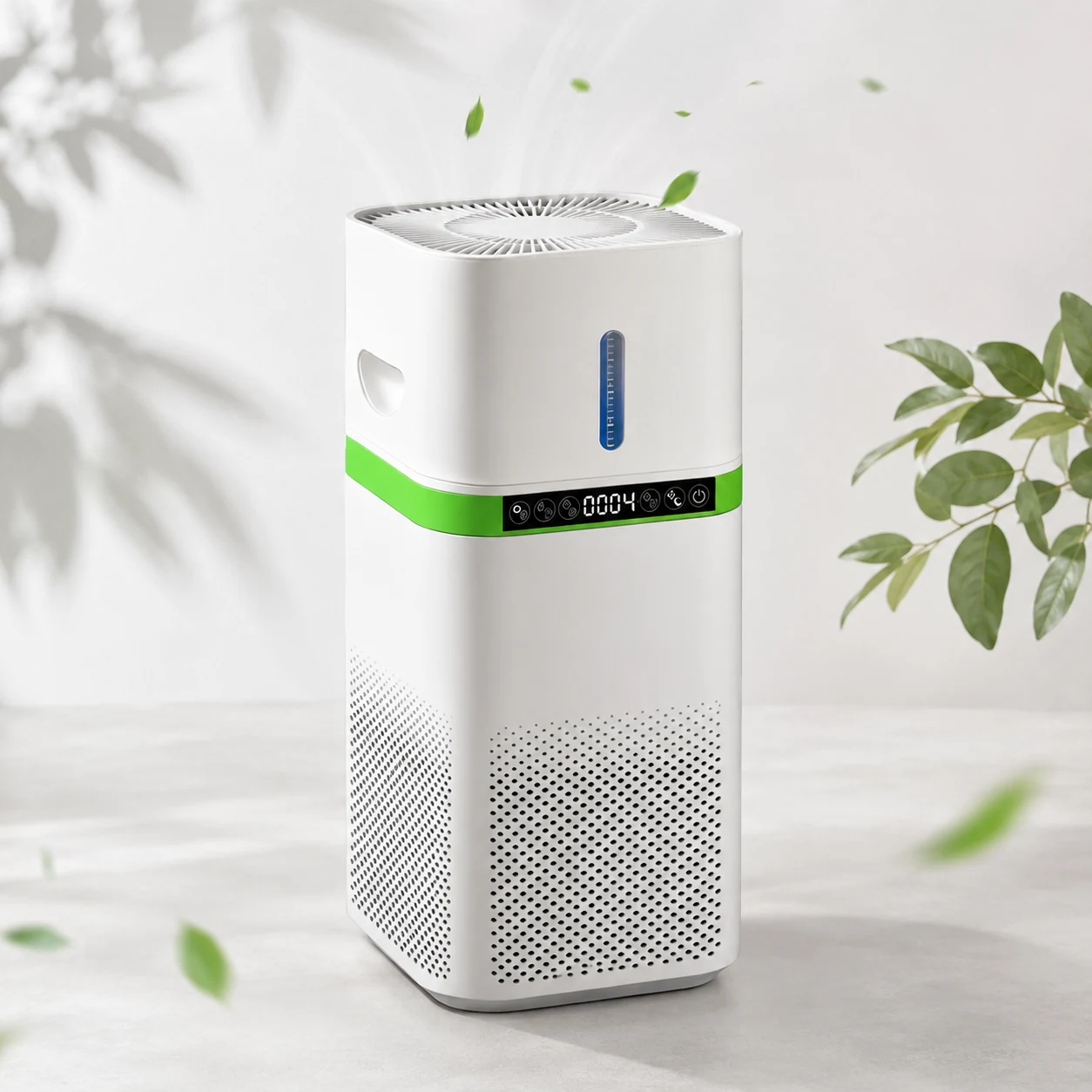
Smart control is most useful when the product is positioned as a premium home appliance, large room purifier, home-office device or smart home ecosystem product. Consumers may value remote on/off, schedule settings, filter reminders or air-quality display integration, depending on the model. For Amazon sellers, smart features can support a differentiated title and image set. For distributors, smart models can create a higher price tier above basic bedroom purifiers.
However, smart features are not necessary for every SKU. Entry-level wholesale channels may prefer simpler models with fewer support questions. Baby room or bedroom lines may prioritize quiet mode, child lock and easy filter replacement over app control. Review baby room positioning and office purifier sourcing before deciding.
2. What to confirm before choosing WiFi or Tuya app options
Start with model compatibility. Not every air purifier design supports the same control board or app configuration. Ask whether the selected model can support WiFi, whether Tuya app integration is available for the project scope, and what functions can be shown in the app. Confirm target country, language needs and whether the user manual must include app setup instructions.
| Feature Area | Buyer Question | Sourcing Impact |
|---|---|---|
| WiFi control | Is this model compatible with WiFi control? | Affects control board, testing and support |
| Tuya app | Which functions can appear in the app? | Defines product page and manual wording |
| Language | What languages are needed for manual and packaging? | Impacts artwork and customer support |
| Compliance | Are additional wireless-related documents needed? | Must be confirmed by target market and model |
3. Smart features and product positioning
A smart purifier should not rely only on the word "smart." Build the value story around real scenarios: checking status before arriving home, scheduling operation, receiving filter reminders, or managing a purifier in a home office. For large room air purifiers, smart control can support premium positioning. For pet or odor products, app control may matter less than activated carbon filter planning and replacement filter bundles.
Do not overpromise voice assistant support, sensor accuracy or automation unless confirmed. If the model includes air-quality display or sensor-related features, ask what can be shown on the product and what should be described cautiously in packaging.
4. Packaging and user manual requirements
Smart products need clearer instructions than basic purifiers. The color box should explain key features without making unsupported claims. The user manual should include pairing steps if app setup is included. Customer support teams should understand common setup questions, especially for WiFi networks, app downloads and filter reminder resets. For private-label brands, ask whether manual translation and packaging artwork support are available.
5. MOQ and cost considerations for smart purifier projects
Smart customization may affect MOQ, price and lead time because it can involve different components, setup work and testing. Discuss sample evaluation first. Confirm whether the factory can provide a sample with the smart configuration you plan to sell. Then review wholesale pricing through the MOQ and pricing strategy guide. If the smart feature increases cost but your channel cannot support a higher retail price, a non-smart model may be the better launch choice.
6. Certification and claim control
Wireless features may create additional compliance questions depending on the target market. Ask for model-specific certification support and do not publish certificate numbers or wireless claims unless documents are current and applicable. Review LYL Clean Air certification support and request current files before sampling or bulk order.
7. Smart purifier RFQ checklist
Your inquiry should include target country, sales channel, preferred product style, estimated quantity, plug standard, WiFi or Tuya app needs, required app functions, manual language, packaging scope, certification requirements and whether replacement filters should be bundled. If you are not sure which model fits, share your target use case: office, large room, bedroom, baby room, pet odor or general home.
FAQ
Should every private-label air purifier include WiFi?
No. WiFi is useful for premium or smart-home positioning, but simple models can be better for cost-sensitive wholesale channels.
Can I use Tuya app wording on my listing immediately?
Only after confirming the selected model and project scope support Tuya app integration and the specific functions you plan to mention.
What is the biggest risk in smart purifier sourcing?
The biggest risk is promising app functions before they are confirmed. Keep product page wording aligned with the exact model configuration.
Smart Purifier OEM CTA
Want to compare smart and non-smart purifier options?
Send your target country, channel and desired app features. LYL Clean Air will help shortlist suitable models and customization requirements.
Request Smart Purifier Quote