By the LYL Clean Air Engineering Team · Published Jun 29, 2026 · Updated Aug 6, 2026
Saudi Arabia and the wider Gulf are strong, growing markets for HEPA air purifiers — but the paperwork stops more shipments than the price ever does. The good news: the system is predictable once you know the four moving parts. This guide explains each one and who is responsible for it.
The Four Things You Need, at a Glance
| Element | What it is | Issued |
|---|---|---|
| SABER | SASO’s online conformity platform where products and shipments are registered | Account-based (importer + supplier) |
| PCoC | Product Certificate of Conformity — model meets SASO technical regulations | Per product, ~1-year validity, via a CAB |
| SCoC | Shipment Certificate of Conformity — this shipment matches the certified product | Per shipment, required at customs |
| G-Mark | Gulf Conformity Mark for low-voltage electrical equipment (GCC-wide) | DoC or Type Examination, by risk class |
Sources: Tetra Inspection — SASO/SABER guide; Applus+ — PCoC & SCoC; Intertek — G-Mark for low-voltage electrical.
SABER: the Platform That Replaced the Paper Certificate
SABER is the electronic system run by SASO (the Saudi Standards, Metrology and Quality Organization). It replaced the old paper SASO Certificate of Conformity and is now the single route through which regulated products are certified and cleared. Both the Saudi importer and the manufacturer or supplier need SABER-linked accounts, and nothing clears customs unless it has moved through SABER.
PCoC: Certifying the Product
The Product Certificate of Conformity is the foundation. An authorized Conformity Assessment Body (CAB) reviews accredited-laboratory test reports for the model and, if it complies with the applicable SASO technical regulation, issues the PCoC — typically valid for one year per product. For an air purifier, the technical file usually rests on household-appliance electrical-safety testing (IEC 60335 series, including the air-cleaner-specific part) and EMC. Get this right once and every shipment for the next year becomes routine.
SCoC: Clearing Each Shipment
The Shipment Certificate of Conformity is issued per shipment and is what Saudi customs checks at the border. It simply confirms the goods in this container match the product already certified by the PCoC. The hard rule to remember: no PCoC, no SCoC — so the product certification must be finished before goods arrive, not after.
G-Mark: the Gulf-Wide Layer
Beyond Saudi-specific SABER, an air purifier is a low-voltage electrical appliance, which places it under the Gulf Technical Regulation for Low Voltage Electrical Equipment (BD142004-01), administered by the Gulf Standardization Organization (GSO) across all six GCC states — Saudi Arabia, UAE, Kuwait, Qatar, Oman and Bahrain. Compliance is shown with the G-Mark. There are two routes by risk class: lower-risk products use a Supplier Declaration of Conformity, while higher-risk products need a Gulf Type Examination Certificate from a notified body. Confirm which route applies to your exact model with the assessment body — do not assume.
Step by Step
- 1. Confirm the standards. With your factory and a CAB, fix the applicable safety (IEC 60335) and EMC standards for the model.
- 2. Test at an accredited lab. The manufacturer arranges testing and assembles the technical file.
- 3. Register on SABER & get the PCoC. The importer registers the product; the CAB issues the one-year PCoC.
- 4. Apply the G-Mark per the correct GCC route for the product.
- 5. Per shipment, get the SCoC through SABER before the goods reach customs.
Who Does What
This is where deals stall, so be explicit up front:
- The Saudi importer of record holds the SABER account and drives PCoC and SCoC.
- The factory supplies the technical file, accredited test reports and product photos, and applies the G-Mark and labeling.
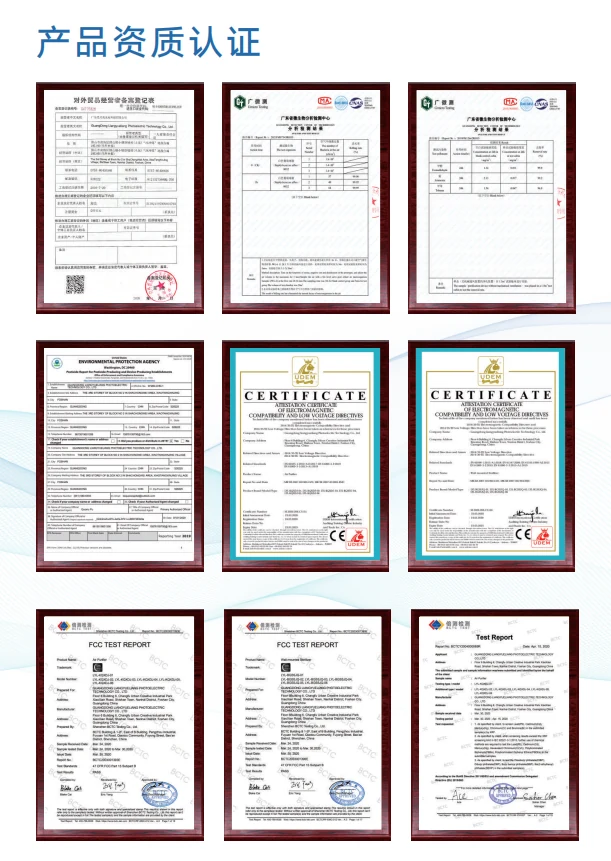
LYL Clean Air supports Gulf-bound projects by providing the test reports, technical documentation and compliant labeling your Saudi importer needs to complete SABER registration and secure the PCoC. Tell us your target Gulf market and we will prepare the document set for the model you select.
Shipping air purifiers to Saudi Arabia or the GCC?
Ask us for the SABER/G-Mark document pack — test reports, technical file and labeling for your selected model.
Request the Gulf Document PackRelated Sourcing Guides
- CARB certification for the US market — the equivalent gate for Amazon and California.
- EU CE compliance — the European market gate.
- Compliance by market — the US / EU / Gulf / UK hub.
- Air purifier certifications overview — CE, FCC, RoHS, CARB, ETL, ISO9001 support.
- Air purifier certification guide — how the global document set fits together.
- Air purifier models — browse the OEM/ODM range for Gulf projects.
This guide is general sourcing information, not legal or regulatory advice. SASO technical regulations, SABER procedures and GCC requirements change — verify current rules with SASO, a Conformity Assessment Body and your importer before shipping.