In the global air purifier market, compliance is not just about avoiding legal issues—it is a critical part of your brand value and channel distribution. For B2B importers, private labels, and Amazon FBA sellers, selecting an OEM partner who understands global compliance is the difference between a successful product launch and custom seizure or listing suspension.
This comprehensive guide breaks down the essential certifications required for major markets, including North America, Europe, Australia, and the Middle East. It details the step-by-step compliance flow and provides practical verification checklists for B2B procurement.
1. Why Air Purifier Certifications Matter for B2B Sourcing
Sourcing air purifiers involves complex electrical and environmental safety considerations. Because these devices run continuously for long periods in living rooms, bedrooms, and commercial spaces, regulatory bodies enforce strict guidelines. Key reasons to prioritize certifications include:
- Market Access: Uncertified electronic items can be held or destroyed by customs authorities during import clearance.
- Platform Compliance: Major online marketplaces like Amazon require direct submission of test reports (such as FCC and CARB for California) before listings can go live.
- Channel Expansion: Professional wholesale distributors and national retail chains will refuse to list any air treatment device that lacks certified safety approvals from accredited laboratories.
- Insurance & Liability: Selling uncertified hardware invalidates commercial liability insurance, putting your B2B organization at risk in the event of an electrical failure or overheating incident.
2. Key Global Air Purifier Certifications: A Region-by-Region Breakdown
Each global market has its own set of mandatory and voluntary standards. When designing your air purifier OEM line, you must target the specific regional regulations of your destination market:
United States and Canada
For the North American market, electronic air cleaners are subject to both federal and state-level regulations. Key compliance requirements include:
- ETL / UL (Electrical Safety): Confirms the unit complies with safety standards (like UL 507 or CSA standards) and has undergone fire and shock hazard testing.
- FCC (Electromagnetic Compatibility): Required for all digital devices to ensure they do not cause harmful radio frequency interference. FCC Part 15 subpart B is mandatory.
- CARB (California Air Resources Board): California state regulation that restricts ozone emission to below 0.050 ppm. Every air purifier sold in California must be certified by CARB.
- Energy Star (Voluntary): Increases product appeal for eco-conscious buyers by certifying energy-efficient operation.
European Union and United Kingdom
To distribute air purifiers in the EU and UK, safety and environmental standards must be verified through specific markers:
- CE Marking (European Conformity): Declares compliance with EU health, safety, and environmental protection standards (LVD for electrical safety, EMC for electromagnetic compatibility).
- RoHS (Restriction of Hazardous Substances): Restricts the use of specific hazardous materials (such as lead, mercury, and cadmium) in electrical components.
- UKCA (UK Conformity Assessed): The post-Brexit replacement for CE marking on products sold in Great Britain.
Australia and New Zealand
imps into Oceania must comply with regional standards coordinated by regulatory bodies:
- SAA / RCM (Regulatory Compliance Mark): Demonstrates compliance with electrical safety and radio-frequency emission standards in AU and NZ.
3. Essential Compliance Requirements for Major Markets
The table below summarizes the core certifications required for air purifier market entry across different global zones:
| Target Region | Mandatory Certifications | Primary Focus Area | B2B Sourcing Advice |
|---|---|---|---|
| United States | ETL/UL, FCC, CARB (California) | Electrical Safety, RF Emissions, Ozone Safety | CARB is vital for US-wide sales, especially Amazon FBA. |
| European Union | CE (LVD & EMC), RoHS | Product Safety, Material Compliance | Verify CE DoC and test reports from accredited bodies. |
| United Kingdom | UKCA, RoHS | UK Market Product Safety | UKCA uses similar test parameters as CE. |
| Australia / NZ | SAA, RCM | Electrical Safety, RF Emissions | Ensure AU plug standards are confirmed in production. |
| Middle East (GCC) | G-Mark, CB Scheme | Electrical Safety & Compatibility | A CB test certificate simplifies local certification. |
4. Step-by-Step OEM Air Purifier Certification Process
When starting an OEM or ODM private label project with LYL Clean Air, we handle compliance systematically to ensure your model meets target regulations:
- Requirement Analysis: The B2B buyer specifies the target countries, distribution channels (e.g. Amazon, retail chains), and desired compliance markers.
- Model Selection: We match the project to one of our pre-tested base models that already hold foundational CB, CE, or FCC reports, speeding up local testing.
- Testing and Adaptation: If specific certifications are required (like a custom CARB listing or an ETL certification under your brand name), we arrange testing with third-party accredited laboratories (such as SGS, Intertek, or TUV).
- Report Generation: The lab conducts tests on ozone emission, electrical insulation, electromagnetic interference, and fire retardancy. Upon passing, official certificates and test reports are generated.
- Labeling & Packaging: We update the product rating labels, warning tags, user manuals, and packaging artwork with the correct certification logos and compliant formatting before mass production.
5. Common Compliance Pitfalls and OEM Sourcing Advice
As a seasoned air purifier manufacturer, we advise B2B buyers to avoid several common industry pitfalls during their sourcing journey:
- Relying on Generic Certificates: A simple "CE Certificate" template from a non-accredited agency is often rejected by EU custom authorities. Always demand a complete LVD/EMC test report from a reputable, accredited testing lab.
- Forgetting State-Specific Laws: Shipping air purifiers to California without an official CARB registry listing leads to heavy fines and automated Amazon ASIN takedowns. Confirm CARB listing details early in the design stage.
- Ignoring Filter and Packaging Labels: Compliance extends to packaging. For example, plastic bag warning labels, recycling symbols, and country-of-origin markings must be present to satisfy local trade authorities.
- Faking Certificate Numbers: Never fabricate, copy-paste, or guess standard registration numbers or test reports. Compliance bodies maintain searchable public databases. Fake or altered reports will result in lifetime vendor bans on e-commerce platforms and legal seizures at the border.
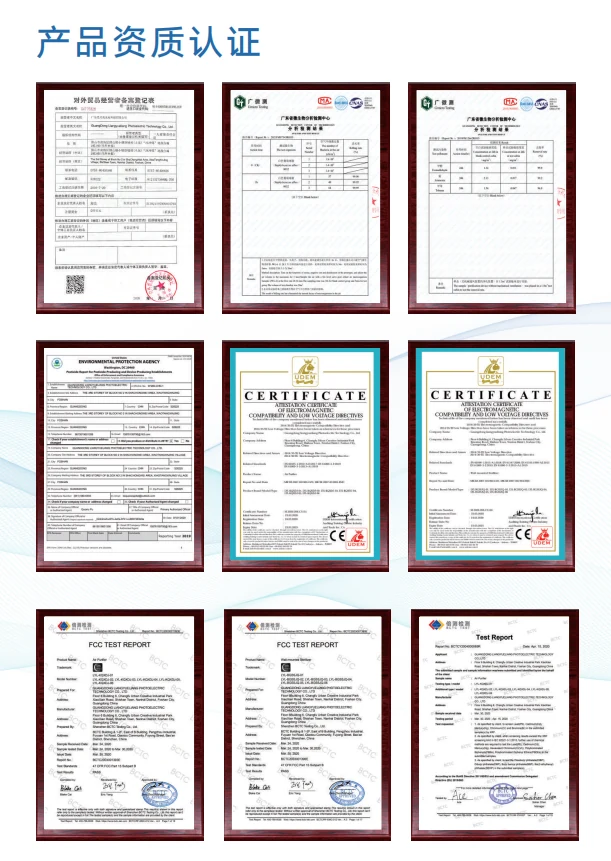
At LYL Clean Air, we prioritize absolute transparency. We provide real, verifiable testing data, CB certificates, and RoHS-compliant materials to ensure absolute peace of mind. Check our Certifications Page or browse our Product Range to review our manufacturing standards.
6. FAQ: Sourcing Certified Air Purifiers for Global Markets
What certifications are required to sell air purifiers on Amazon US?
To list an air purifier on Amazon US, you typically must provide an FCC Part 15 compliance statement, an electrical safety report (ETL or UL 507), and a California Air Resources Board (CARB) Executive Order number if you plan to sell to customers in California. Amazon conducts automated sweeps and will suppress listings that do not provide these verified documents.
Who covers the cost of brand-specific certifications for OEM orders?
For existing models with factory-held certificates (e.g. CE or FCC), the reports can often be shared or co-licensed for a minimal administrative fee. For brand-specific certifications (like a custom UL/ETL listing under the private label brand), testing fees are covered by the buyer or fully rebated by the factory upon reaching a specific bulk order volume milestone.
How do B2B buyers verify that a factory's certificates are authentic?
Authentic certificates include a unique report number, the name of an accredited testing agency, and details of the specific model. Importers can verify these by visiting the official website of the testing agency (e.g. TUV, SGS, Intertek) and entering the report number in their public verification portal. LYL Clean Air assists buyers by providing clean, verifiable documents directly from our certified testing partners.
📋 Ready to Plan Your Certified Air Purifier Line?
To help us prepare your compliance and pricing roadmap, please have your project requirements ready:
- Destination countries and primary sales channels
- Target certifications (e.g. CE, CARB, ETL, SAA)
- Estimated sample and bulk order quantities
- Logo files and target brand concepts